
Dept. of Freshwater Hydrochemistry
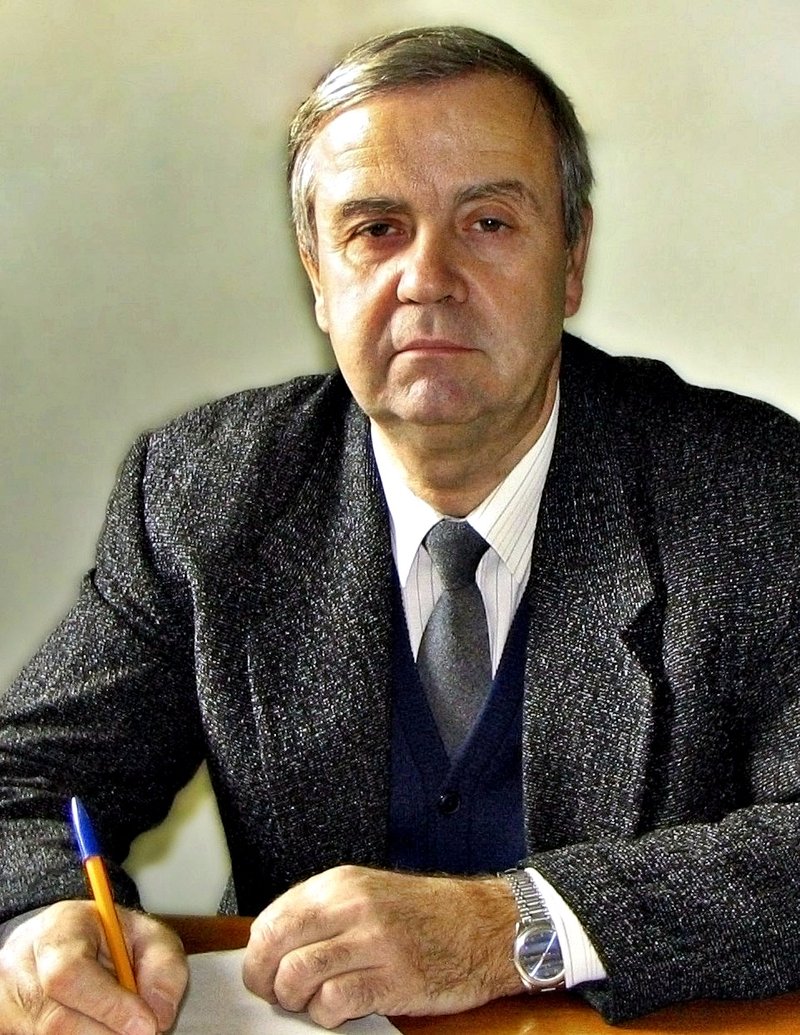
Head of Department
Линник Петро Микитович
д.х.н., професор
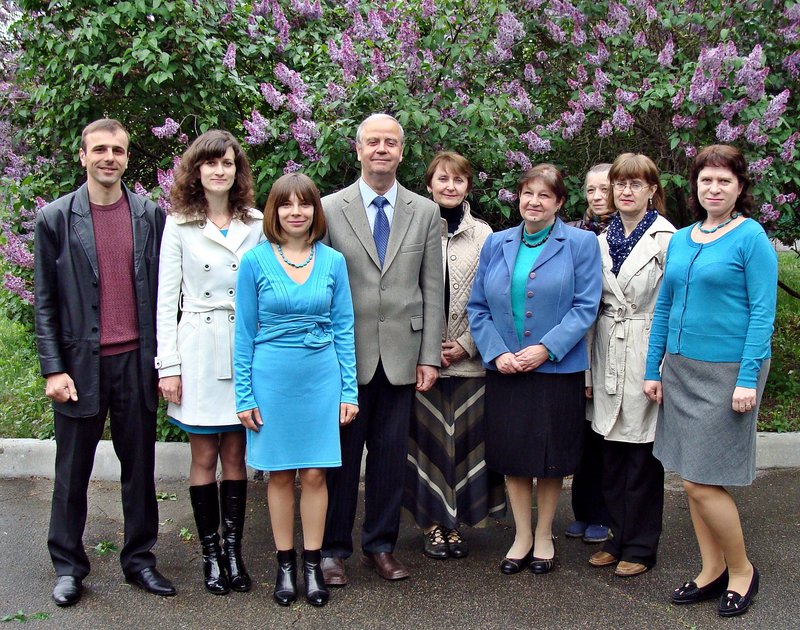
Department staff (left to right): к.геогр.н., с.н.с. Жежеря В.А., к.геогр.н., м.н.с. Жежеря Т.П., к.геогр.н., н.с. Ігнатенко І.І., д.х.н., проф. Линник П.М., к.б.н., с.н.с. Осипенко В.П., м.н.с. Зубенко І.Б., к.геогр.н., с.н.с. Морозова А.О., пров. інженер Євтух Т.В., пров. інженер Конюх Л.І.
Research Directions
Fundamental Research:
- Investigation of matter exchange processes in the sediment–water system under aerobic and anaerobic environmental conditions.
- Investigation of the migration, transformation, and distribution of nutrient elements, organic substances, and metal compounds between abiotic components of freshwater ecosystems under the influence of various factors (aerobic and anaerobic conditions, elevated organic matter and mineral salt content in water, reduced water pH, etc.).
Applied Research:
- Research and assessment of the state of surface water bodies of various types (Dnieper cascade reservoirs, river estuaries, estuaries of the north-western Black Sea coast, lake systems of Kyiv) based on hydrochemical indicators.
- Development of science-based measures to prevent the occurrence of negative phenomena in surface water bodies caused by increasing anthropogenic impacts.
Results
The influence of the most important abiotic environmental factors — including aerobic and anaerobic conditions, elevated humic substance and mineral salt content in water, and pH values — on the migration and distribution of nutrient elements, organic substances, and metal compounds in the sediment–water system has been established. It has been elucidated that oxygen deficiency, complexation involving humic substances, and decreased water pH are the most important factors causing secondary pollution of the aquatic environment through increased migration mobility of substances and their active release from sediments.
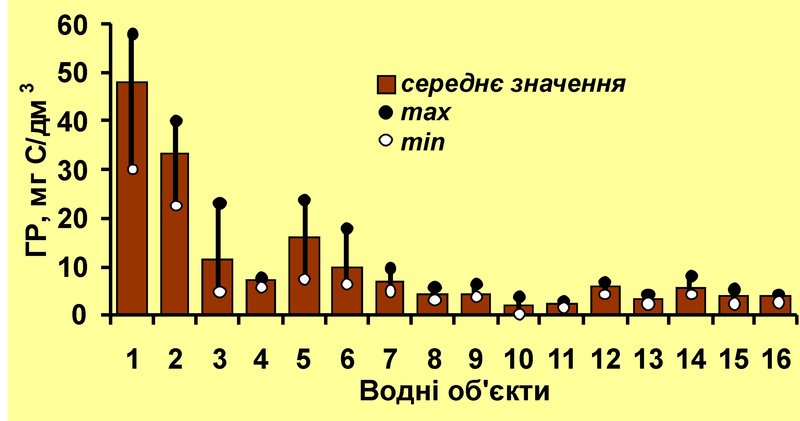
The characteristics of organic matter formation in different types of water bodies have been established. Humic substances have been shown to dominate as the dissolved organic matter fraction in surface waters and to influence water quality formation.
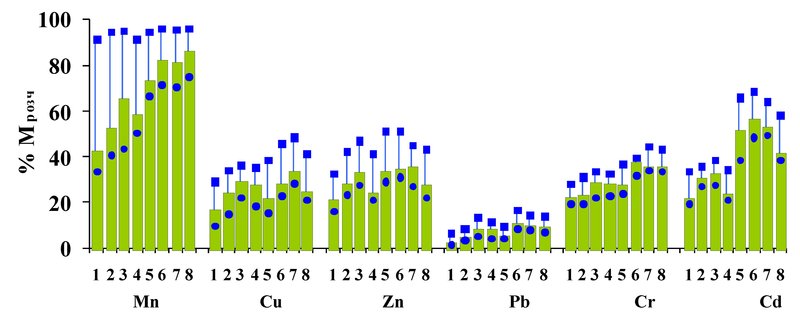
Elevated humic substance content in water causes a reduction in dissolved oxygen content and increased migration mobility of nutrient elements (ammonium nitrogen, iron) in the sediment–water system and of metals (Al, Fe, Cu, Zn, Pb, Mn, Cr, Mo) through their complexation and stabilisation in dissolved form — as demonstrated for rivers of the Prypiat basin, the Kyiv and Kaniv reservoirs, the Desna River, and the low-flow lakes and ponds of Kyiv.
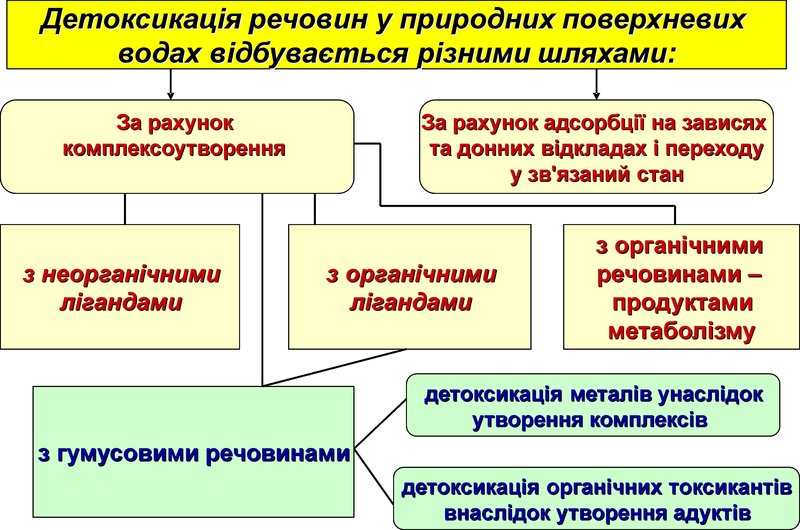
Detoxification of substances characterised by toxicity and negative effects on biota development is of great importance in the functioning of aquatic ecosystems. Complexation involving natural organic substances exerts the greatest influence. Humic substances play a primary role in complexation. Through complex formation, the share of the labile fraction of dissolved metals — the most bioavailable and toxic fraction for aquatic organisms — is sharply reduced.
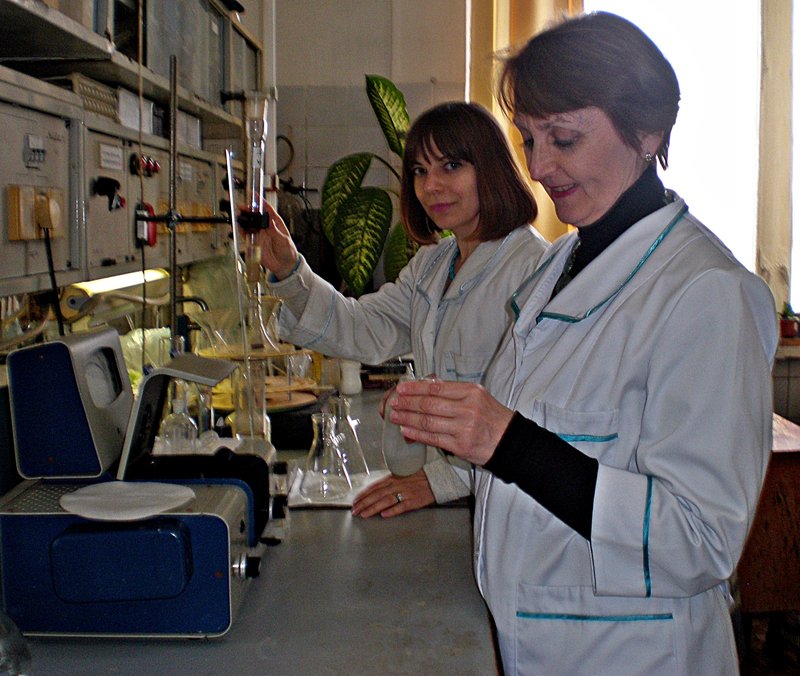
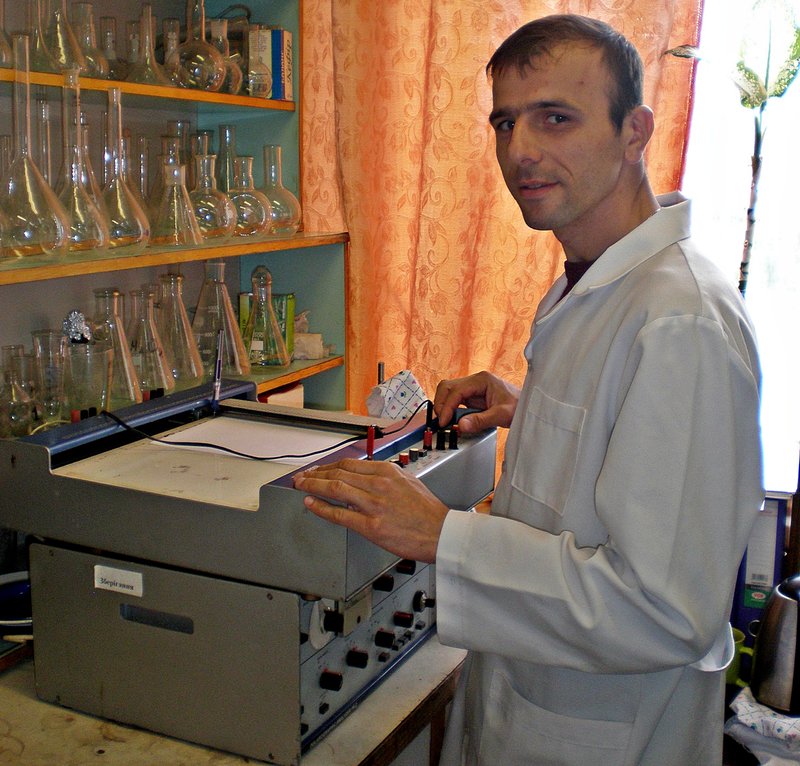
Illustrations
Selected Publications
- Щербак В.І., Майстрова Н.В., Морозова А.О., Семенюк Н.Є. Національний природний парк «Прип'ять–Стохід». Різноманіття альгофлори і гідрохімічна характеристика акваландшафтів / Під ред. В.І. Щербака. – К.: Фітосоціоцентр, 2011. – 164 с.
- Тімченко В.М., Линник П.М., Щербак В.І. та ін. Екологічний стан урбанізованих заплавних водойм. Затока Осокорки. – Київ: Ін-т гідробіології НАН України, 2011. – 76 с.
- Линник П.Н., Иванечко Я.С., Линник Р.П., Жежеря В.А. Методические особенности исследования гумусовых веществ в природных поверхностных водах // Химия и технология воды. – 2013. – Т. 35, № 6. – С. 533–550.
- Осадчий В.І., Набиванець Б.Й., Линник П.М., Осадча Н.М., Набиванець Ю.Б. Процеси формування хімічного складу поверхневих вод. – К.: Ніка-Центр, 2013. – 240 с.
- Тімченко В.М., Линник П.М., Холодько О.П. та ін. Абіотичні компоненти екосистеми Київського водосховища. – Київ: Логос, 2013. – 60 с.
- Осипенко В.П. Сезонные и пространственные изменения содержания и молекулярно-массового распределения углеводов в поверхностных водах // Гидробиол. журн. – 2014. – Т. 50, № 3. – С. 97–107.
- Линник П.Н., Иванечко Я.С. Растворенные углеводы в поверхностных водных объектах Украины // Гидробиол. журн. – 2014. – Т. 50, № 4. – С. 97–119.
- Жежеря Т.П., Задорожная А.М., Линник П.Н. Содержание и формы нахождения кремния в воде Каневского водохранилища и их связь с развитием фитопланктона // Гидробиол. журн. – 2014. – Т. 50, № 2. – С. 106–116.
- Линник П.Н., Жежеря В.А., Линник Р.П. Сравнительная оценка связывающей способности различных фракций гумусовых веществ поверхностных вод по отношению к ионам Al(III), Fe(III) и Cu(II) // Экологическая химия. – 2014. – Т. 23, №4. – С. 223–241.
- Линник П.М., Жежеря В.А., Батог С.В. та ін. Екологічний стан водних об'єктів урбанізованих територій. Китаївські ставки. – К.: Логос. – 2015. – 76 с.
- Линник П.Н., Игнатенко И.И. Молибден в природных поверхностных водах: содержание и формы нахождения // Гидробиол. журн. – 2015. – Т. 51, № 2. – С. 89–113.
- Линник П.Н. Мышьяк в природных водах: формы нахождения, особенности миграции, токсичность (обзор) // Гидробиол. журн. – 2015. – Т. 51, № 4. – С. 91–116.
- Жежеря В.А., Линник П.Н., Жежеря Т.П., Скоблей М.П. Методические особенности пробоподготовки взвешенных веществ и донных отложений // Гидробиол. журн. – 2015. – Т. 51, № 6. – С. 95–114.
- Морозова А.А. Сезонная изменчивость неорганических форм азота и фосфора в водоемах Шацкого НПП // Гідрологія, гідрохімія і гідроекологія. – 2018. – Т. 3 (50). – С. 31–38.
- Осипенко В.П., Євтух Т.В. Гидрохимические исследования р. Лыбеди – правого притока Днепра // Гідрологія, гідрохімія і гідроекологія. – 2015. – Т. 3 (38). – С. 55–60.
- Линник П.Н. Сосуществующие формы хрома в природных поверхностных водах и их значение для водных экосистем // Гидробиол. журн. – 2016. – Т. 52, № 4. – С. 82–102.
- Линник П.Н., Жежеря В.А. Содержание и формы миграции свинца в поверхностных водах // Гидробиол. журн. – 2016. – Т. 52, № 5. – С. 97–120.
- Осипенко В.П., Євтух Т.В. Особливості розподілу розчинених органічних речовин у водоймі урбанізованої території // Гидробиол. журн. – 2018. – Т. 54. – № 3. – С. 90–104.
- Линник П.Н., Жежеря В.А., Линник Р.П. Лабільність металів у поверхневих водах як важлива характеристика їх потенційної біодоступності (огляд) // Гидробиол. журн. – 2018. – Т. 54, № 4. – С. 3–28.
Publications in International Journals (including Springer translations):
- Linnik P.M., Zubenko I.B. Role of bottom sediments in the secondary pollution of aquatic environments by heavy-metal compounds // Lakes and Reservoirs: Research and Management. – 2000. – Vol. 5, № 1. – P. 11–21.
- Linnik P.M. Zinc, lead and cadmium speciation in Dnieper water-bodies // Lakes and Reservoirs: Research and Management. – 2000. – Vol. 5, № 4. – P. 261–270.
- Linnik P.N. Complexation as the most important factor in the fate and transport of heavy metals in the Dnieper water bodies // Anal. Bioanal. Chem. – 2003. – Vol. 376. – P. 405–412.
- Linnik P.N., Vasilchuk T.A. Role of humic substances in the complexation and detoxification of heavy metals: case study of the Dnieper reservoirs // NATO Science Series. IV: Earth and Environmental Series. – Dordrecht: Springer. – 2005. – Vol. 52. – P. 135–154.
- Linnik P.N., Vasylchuk T.A., Osypenko V.P., Zubko A.V. Impact of humic substances on the secondary pollution of an aquatic environment by heavy metals and some organic compounds caused by the bottom sediments // Polish J. Chem. – 2008. – Vol. 82. – P. 411–418.
- Linnik P.N., Ivanechko Ya.S., Linnik R.P., Zhezherya V.A. Humic substances in surface waters of the Ukraine // Russian Journal of General Chemistry. – 2013. – Vol. 83, N 13. – P. 2715–2730.
- Linnik P.N., Dikaya T.P. Concentrations, coexisting forms, and features of silicon distribution and migration in surface waters of Ukraine // Water Resources. – 2014. – Vol. 41, N 6. – P. 696–708.
- Linnik P.N., Zhezherya V.A. Titanium in natural surface waters: The content and coexisting forms // Russian Journal of General Chemistry. – 2015. – Vol. 85. – P. 2908–2920.
- Linnik P.N., Zhezherya V.A., Linnik R.P. et al. Metals in surface water of Ukraine: the migration forms, features of distribution between the abiotic components of aquatic ecosystems, and potential bioavailability // Russian Journal of General Chemistry. – 2015. – Vol. 85, N 13. – P. 2965–2984.
- Osadchyy V., Nabyvanets B., Linnik P., Osadcha N., Nabyvanets Yu. Processes determining surface water chemistry. – Switzerland: Springer International Publishing, 2016. – 270 p.
- Linnik P.N. Coexisting Manganese Species in Surface Water of the Ukraine and Their Significance for Aquatic Ecosystems // Russian Journal of General Chemistry. – 2018. – Vol. 88, №13. – P. 2918–2927.
Patents:
- Линник П.М., Жежеря В.А., Дика Т.П. Спосіб двостадійної обробки проб завислих речовин і донних відкладів // Пат. 107989 Україна, МПК G01N 1/00; власник Ін-т гідробіології НАН України. – № а 2013 05219; заяв. 23.04.2013; опубл. 10.03.15, Бюл. № 5.
- Жежеря В.А. Модифікований батометр-склянка // Пат. на корисну модель № 75995 Україна, МПК G01N 1/00; власник Ін-т гідробіології НАН України. – № u 2012 05246; заяв. 27.04.12; опубл. 25.12.12, Бюл. № 24.